From the Mayor

Set underneath Mid Canterbury’s sprawling skies, our Open Spaces play a major role in the life stories of our local people.

Our 429 hectares of open spaces need both careful planning and bold vision, underpinned by the values and principles that our community hold dear.

That’s what this Open Spaces Strategy 2026-36 aims to do.

Our parks, reserves, sport fields, lakes, walkways, cycleways, and civic spaces help us be active and connect or spend quiet time reflecting.

They protect our heritage and biodiversity, while enhancing Ashburton District’s appeal for future generations.

A lot has been achieved since the last Open Spaces strategy was last written in 2016, from the Ashburton Domain becoming a Four-Star Garden of Significance, to the completion of the Ng King Brothers Market Garden Settlement.

But it’s a decade old, and times have changed, so we’d like to know what the community wants to see now and in another ten years’ time.

So, have we got the vision right? Let's hear what you have to say.

Our Principles

The following principles will help guide us as we work towards achieving objectives and actions set out in this strategy:

  1. People first: Design for everyday use— comfortable, welcoming, accessible.
  2. Nature positive: Protect and restore habitats, waterways, and biodiversity.
  3. Partnership & Kaitiakitaka: Work with others to enhance our open spaces, and care for place with mana whenua, respecting mātauraka Māori.
  4. Access for all: Remove barriers; provide equitable, inclusive experiences where practicable.
  5. Safety by design: Safe routes, visibility, and upkeep.
  6. Local identity & heritage: Reflect our stories, landscapes, and cultural values.
  7. Climate resilience: Plan for floods, heat, and drought; use resilience planting.
  8. Connected network: Link towns, schools, parks, rivers, and trails.
  9. Value over time: Look after our assets well and replace them at the right time so we get the best value for money over their whole life.
  10. Evidence led & adaptive: Use data, monitor outcomes, improve continuously.

Find out more on page 14-20 of the draft strategy.

Our Goals and Objectives

Goal One

Goal Two

Goal Three

Goal Four

Why do we need a strategy?

Our Open Spaces Strategy explains how we plan for parks, reserves, and other outdoor places as our district grows and changes. As more people live, work, and play in Ashburton, the way we use our open spaces will also change.

The strategy helps us make sure our open spaces stay welcoming, functional, and enjoyable for everyone—now and into the future.

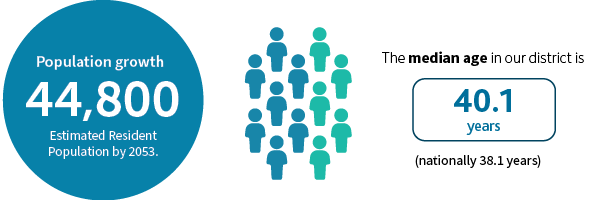
Population growth: From 36,100 (2023) to 44,800 by 2053.

Age: Median age 40.1 years, slightly older than the national median of 38.1 years.

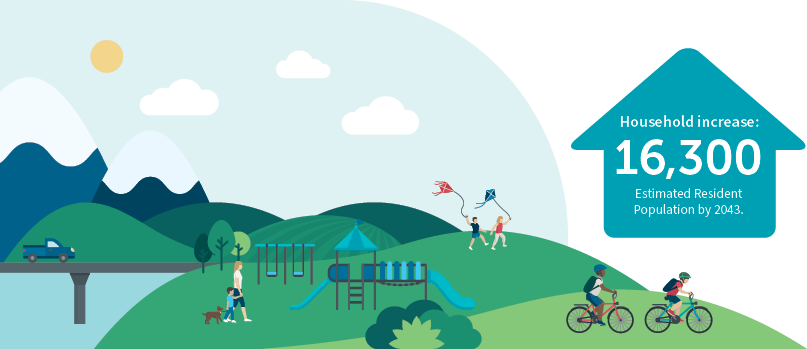
Household increase: From 14,300 (2023) to 16,300 (2043).

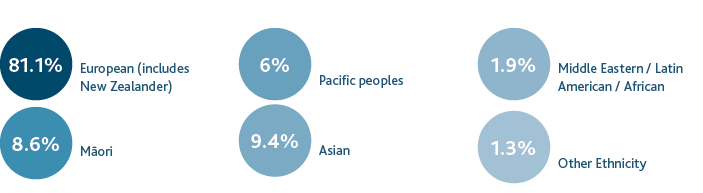
Diversity: Percentage of population that identify with ethnic group European (81.1%) Māori (8.6%), Pacific People (6%), Asian (9.4%), Middle Eastern/Latin America/African (1.9%), Other Ethnicity (1.3%)

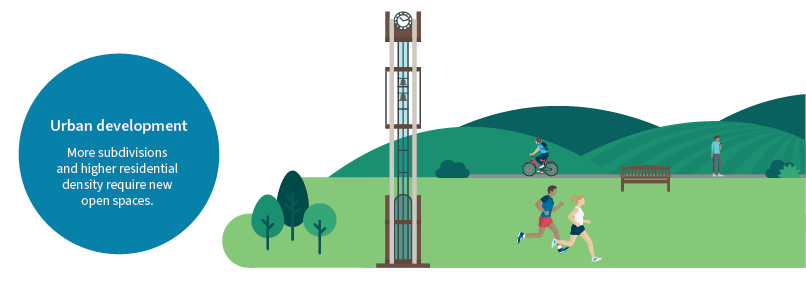
Urban development: More subdivisions and higher residential density require new open spaces.